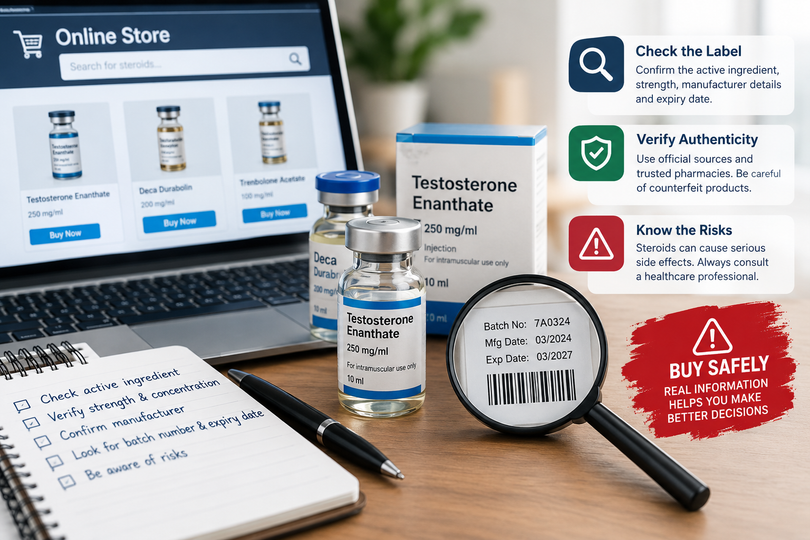

Online shopping has changed how people research healthcare products and access medication information. However, when it comes to steroid medications, understanding product labels, active ingredients, and potential health risks is particularly important. Consumers researching steroids online may encounter products with confusing descriptions, exaggerated marketing claims, or insufficient information about their manufacturing and regulatory status.
The term Steroid depot generally refers to a formulation designed to release a medication gradually over an extended period. Certain depot formulations have legitimate medical applications, but their suitability depends on the specific medicine, the patient’s condition, and professional medical assessment.
Before considering a steroids purchase, consumers should understand the differences between steroid categories, learn how to interpret medication labels, and recognize the limitations of information provided by online sellers. This guide explores essential labeling details, ingredient verification, common warning signs, and practical steps for making informed healthcare decisions.
What Is a Steroid Depot?
A steroid depot is a formulation intended to provide prolonged medication release after administration. Some injectable preparations use chemical modifications or specialized formulations that influence how quickly the active ingredient becomes available in the body.
The duration of action depends on the particular medication, its formulation, and individual physiological factors.
Depot formulations are used in different areas of medicine. Certain corticosteroid injections are prescribed for specific inflammatory conditions, while some long-acting testosterone preparations are used to treat medically diagnosed testosterone deficiency.
It is important to distinguish corticosteroids from anabolic-androgenic steroids. Corticosteroids primarily help manage inflammation and immune responses, whereas anabolic-androgenic steroids act on androgen receptors and influence muscle development and other physiological processes.
Although both groups are commonly described as steroids, they have different medical applications, potential adverse effects, and monitoring requirements.
Understanding these differences is the first step toward evaluating product information accurately.
Understanding Steroid Product Labels
Medication labels provide essential information about a product’s identity, strength, intended use, and storage requirements. However, interpreting a label requires more than reading the product name.
1. Active Ingredient
The active ingredient is the substance responsible for the medication’s intended pharmacological effect.
For example, two products marketed as steroid medications may contain completely different active ingredients and therefore have different uses and risks.
Consumers should check the exact ingredient name against official product documentation rather than assuming that products with similar branding are interchangeable.
2. Concentration and Strength
Labels may express medication strength in milligrams per tablet, milligrams per milliliter, or another appropriate unit.
These measurements describe different aspects of a product and should not be confused. A higher concentration does not automatically mean a medication is more suitable or effective for a particular patient.
Any uncertainty about strength, units, or formulation should be discussed with a pharmacist or prescribing clinician.
3. Manufacturer Information
Legitimate medication packaging generally identifies the manufacturer or marketing authorization holder and provides other relevant product information.
However, counterfeit products can reproduce authentic-looking packaging and manufacturer details. A label that appears professional is not sufficient proof of authenticity.
Where available, consumers should use official verification services or consult an authorized pharmacist if the origin of a product is uncertain.
4. Batch Numbers and Expiration Dates
Batch or lot numbers help manufacturers and regulators trace products through the supply chain. Expiration dates indicate the period during which a medicine is expected to meet its specifications under the stated storage conditions.
Missing, altered, inconsistent, or suspicious labeling should raise concerns.
Nevertheless, the presence of a batch number and expiration date does not independently establish that a product is genuine or has been stored correctly.
Why Ingredients Matter When Shopping for Steroids Online
Searching for steroids online can expose consumers to legitimate medical information as well as unverified products and misleading advertisements.
Some sellers emphasize branding, packaging, or customer testimonials while providing limited information about the actual ingredients. Others make claims about purity or effectiveness without offering independently verifiable evidence.
Consumers should prioritize transparent product information and authorization by the relevant medicines regulator.
It is also important to recognize that ingredients listed on a website may not match the contents of the product supplied. Counterfeit or contaminated medications can contain incorrect substances, unexpected ingredients, or different concentrations from those stated on the label.
This creates particular concerns for injectable medications because contamination or inappropriate formulation may cause serious complications.
When a product’s identity or quality cannot be established, the safest approach is not to use it and to consult a qualified healthcare professional.
Evaluating an Online Steroid Store
Before considering a steroids purchase, consumers should assess whether the seller operates within the applicable regulatory framework.
Verify Regulatory Authorization
Check whether the online pharmacy is licensed and whether the medication is authorized for sale in the relevant jurisdiction. Official pharmacy registers and national medicines regulators can help establish this information.
Requirements vary by country, particularly for prescription medications and international shipments.
Review Prescription Requirements
Some steroid medications require a valid prescription. A website that offers prescription-only products without the legally required medical assessment may be operating outside appropriate safeguards.
A responsible seller should follow applicable prescription rules rather than encouraging customers to bypass them.
Examine Business Transparency
Look for verifiable business information, clear customer support channels, and transparent policies.
Be cautious when a seller uses anonymous contact details, makes unrealistic promises, or refuses to provide basic information about its regulatory status.
Treat Customer Reviews Carefully
Customer reviews can help describe purchasing experiences, but they cannot reliably establish a medication’s composition, purity, or medical safety.
Testimonials may be incomplete, manipulated, or based on subjective experiences. Independent regulatory verification and professional advice are more reliable sources of information.
Health Risks Associated With Steroid Products
The health risks associated with steroid medications vary according to the active ingredient, dosage, duration of use, administration method, and individual health history.
Anabolic-androgenic steroid misuse can suppress natural testosterone production and affect fertility. Other potential complications include acne, hair loss, mood changes, elevated blood pressure, unfavorable cholesterol levels, and increased cardiovascular risk.
Some anabolic steroids can also cause liver injury. Women may experience menstrual disturbances, increased facial hair, voice deepening, and other changes that can be irreversible.
Adolescents face additional risks because anabolic steroid exposure may interfere with normal growth and development.
Corticosteroids have a different safety profile. Depending on the medication and treatment circumstances, potential adverse effects may include elevated blood glucose, reduced immune function, and changes in bone health.
A genuine product is not necessarily appropriate for every individual. Authenticity and medical suitability are separate considerations.
Anyone experiencing chest pain, difficulty breathing, fainting, or signs of a severe allergic reaction after using a medication should seek urgent medical attention.
Special Considerations for Steroid Depot Formulations
A Steroid depot formulation deserves particular attention because its effects may continue after administration.
The prolonged release of certain medications can be useful when a clinician determines that a longer duration of action is appropriate. However, the same characteristic can complicate the management of adverse reactions.
A person cannot necessarily reverse the effects of a depot medication simply by deciding not to take another dose.
For this reason, the choice of formulation, treatment schedule, and monitoring plan should be determined by a qualified healthcare professional.
Consumers should also understand that different depot preparations are not automatically interchangeable. Their active ingredients, release characteristics, medical indications, and administration requirements may differ substantially.
Never assume that a product is safe to inject based solely on its appearance, online description, or seller’s assurances.
Safe Storage and Handling
Medication quality can be affected by exposure to unsuitable temperatures, light, moisture, or other environmental conditions.
Storage requirements vary by product, so consumers should follow the official instructions provided with an authorized medication.
Packaging damage, broken seals, unusual discoloration, or inconsistent labeling may indicate a problem, although visual inspection cannot identify every quality defect.
If a medication appears compromised or its storage history is uncertain, consult a pharmacist before using it.
Injectable products should never be used when sterility or product identity cannot be established reliably.
Making an Informed Steroids Purchase Decision
A responsible steroids purchase decision begins with a clear understanding of the medical need rather than promotional claims or recommendations from online communities.
Consult a qualified healthcare professional before using prescription steroid medication. Depending on the treatment, appropriate assessment may include reviewing medical history, checking for interactions, and conducting laboratory tests.
People considering anabolic steroids for bodybuilding should understand that nonmedical use can create significant health risks even when products are authentic.
If symptoms such as persistent fatigue, reduced strength, or low libido raise concerns about hormone levels, a medical evaluation can help identify possible underlying causes.
Avoid relying on unverified online advice to select ingredients, determine doses, or combine products.
Conclusion
Understanding medication labels, ingredients, and safety risks is essential when researching steroid products. Consumers exploring steroids online should verify regulatory authorization, examine product information carefully, and recognize that professional packaging or positive reviews cannot guarantee authenticity.
A Steroid depot may have legitimate medical applications, but its prolonged effects make appropriate product selection and medical supervision particularly important.
Before making a steroids purchase, consult a qualified healthcare professional, follow applicable prescription requirements, and obtain medication through authorized channels.
Ultimately, informed healthcare decisions depend on reliable evidence, transparent product information, and a commitment to long-term health rather than marketing promises.